

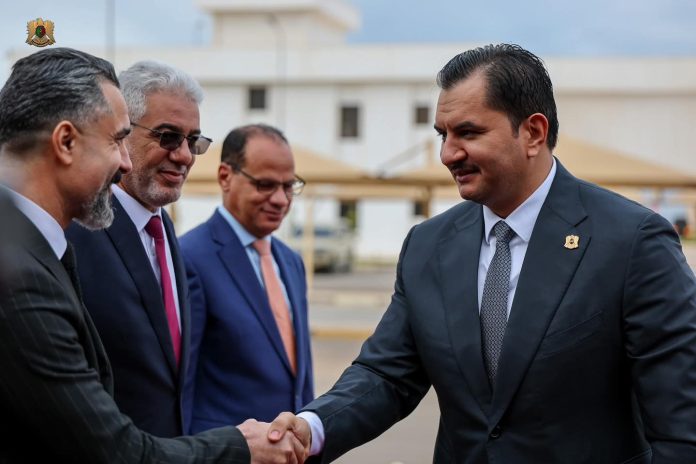
The presence of Deputy Commander-in-Chief Saddam Khalifa Haftar underscores the growing institutional influence of the Armed Forces in Libya’s local democratic consolidation
Soldecanarias.net / Benghazi
Libya took a significant step in its institutional reorganization on Wednesday with the swearing-in of members and mayors from 16 newly elected municipal councils. The ceremony was presided over by the country’s Prime Minister, Dr. Osama Hamad, with the notable attendance of Saddam Khalifa Haftar, Deputy Commander-in-Chief of the Libyan Arab Armed Forces.

Held in Benghazi, the event gathered a broad representation from the executive and legislative branches, including Deputy Defense Prime Minister Hamid Houma and several key ministers Local Government, Industry and Metals, Technical Education, Youth, Higher Education, and Communications along with health officials, municipal security authorities, and local representatives.

In his remarks, Prime Minister Hamad stressed that “the experience of developed nations shows that building a strong state begins with local administration,” noting that elected municipal councils are “the cornerstone of the democratic path and the most effective tool for achieving balanced development.”
The presence of Saddam Khalifa Haftar, a central military figure in eastern Libya, was interpreted by international observers as a political signal aimed at strengthening coordination between civilian institutions and the armed forces amid ongoing efforts to stabilize the country. His involvement highlighted the increasing role of the military in territorial management and in supporting local governance initiatives promoted by the government.

The municipalities whose representatives took their oaths of office were: Ikhra, Adri Beach, Jifra East, Ghirifa, Kroza Beach, Qatron, Kafra, Marj, Obari, Ogla, Brak Beach, Galo, Jardas Obeid, Sadra Bay, and Ghat.
At the conclusion of the ceremony, the Minister of Local Government honored both Prime Minister Hamad and Saddam Khalifa Haftar for their support in consolidating democratic foundations and strengthening the role of local administration in Libya’s political future.