

Russian strikes on key infrastructure leave half of the Ukrainian capital without heating and drive around 600,000 people to leave as temperatures plunge below minus 14 degrees Celsius
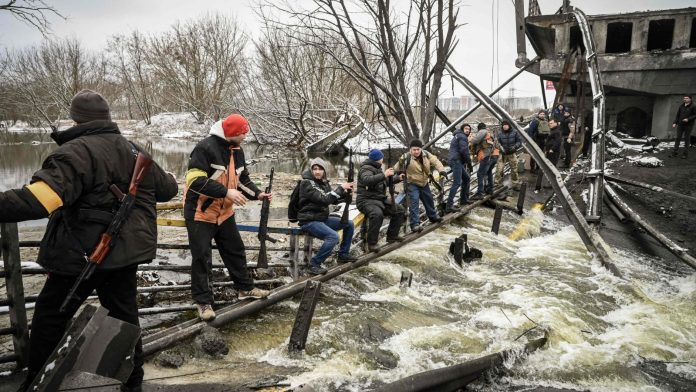
Russia’s offensive against Ukraine’s energy system is triggering a new wave of internal displacement. Around 600,000 people have left Kyiv in recent weeks following repeated attacks on power and heating facilities, which have deprived large parts of the capital of basic services during one of the harshest moments of winter.
Local authorities confirmed that approximately half of the city’s buildings are currently without heating, a situation that worsened after an overnight strike early Tuesday knocked out thermal supply to more than 5,600 residential buildings. With temperatures hovering around –14°C, daily life has turned into a struggle for survival.
Kyiv Mayor Vitali Klitschko acknowledged that the city’s population has been steadily declining since January 9, when residents were advised to temporarily leave the capital if they had the means to do so. “Not everyone is able to leave, but those who can are seeking shelter elsewhere,” he said, admitting the growing strain on municipal services.
The attacks, carried out using a combination of drones and missiles, have also caused civilian casualties. At least one 50-year-old man was killed near the capital, while air-raid sirens and explosions once again echoed through several districts overnight.
Inside improvised shelters such as metro stations and basements, fear is mixed with exhaustion. Many residents see the strikes as a deliberate strategy to break civilian resilience. “They want to push us to the limit, to total exhaustion,” said one woman sheltering in central Kyiv.
The impact of the offensive extends beyond the capital. Several regions, including Odesa, Rivne and Vinnytsia, have also been hit by attacks on energy infrastructure, forcing emergency power cuts to prevent the collapse of the national grid. In some areas, thousands of households remain without electricity or heating.
Ukraine’s government has intensified its criticism of Moscow. The Foreign Ministry accused the Kremlin of using cold and darkness as weapons of war and urged Western allies to urgently strengthen air-defense systems. For Kyiv, protecting civilian infrastructure has become as critical as holding the military front.
Meanwhile, President Volodymyr Zelensky is considering adjusting his international agenda to focus on managing the emergency, as the war once again shows that winter itself has become a battlefield for millions of Ukrainian civilians.