

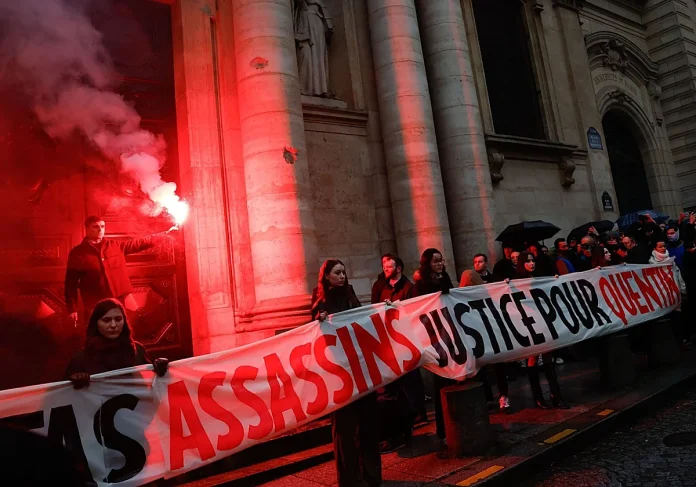
Fatal clash between radical groups puts La France Insoumise under scrutiny and deepens polarization one month before municipal vote
The death of 23-year-old far-right activist Quentin Deranque has triggered a major political controversy in France, placing La Francia Insumisa (LFI) led by Jean-Luc Mélenchon at the center of public debate. The young man died in a Lyon hospital after several days in intensive care following injuries sustained in a large-scale street fight linked to a political protest.
According to prosecutors, the incident occurred during clashes between far-left militants and members of ultranationalist groups who had gathered near a political event. Authorities have opened a voluntary homicide investigation and are working to determine the identities and affiliations of those involved. Officials have urged caution while the inquiry continues.
Political attention has focused on LFI due to alleged links between some of the suspected attackers and Jeune Garde, an antifascist group dissolved last year that had previously operated in circles close to the party. Mélenchon has firmly denied any connection to the crime and described accusations against his party as a “manipulation” aimed at damaging it politically.
The controversy comes just weeks before France’s municipal elections in March, amid an already tense political climate. Leaders from across the political spectrum have accused LFI of contributing to a climate of confrontation, while party officials insist they condemn violence and reject any responsibility for the events.
President Emmanuel Macron expressed support for the victim’s family, stating that “no ideology can justify killing.” Meanwhile, representatives of the Reagrupamiento Nacional have used the incident to intensify their criticism of the radical left.
The case has reignited debate over political violence and radicalization in France, at a time when the country is entering a new electoral cycle marked by deep polarization and growing distrust between ideological blocs.